INDUSTRIES — ELECTRICAL

Selling Your Texas Electrical Contracting Business? Build Value First.

We’re hands-on business advisors for Texas electrical contractors. We work inside your company to fix what makes it hard to run and worth less, so it runs without you and sells for more whenever you’re ready.

Two electrical shops doing the same revenue can be worth very different numbers. The swing is recurring service and contract work versus one-off bid projects, and how much runs through you and your license. We close it: grow the recurring base, get the estimating off you, plan for a licensed master who isn’t you, and clean up the books.

See how we work with you

A free self-assessment, a Field Guide you run yourself, a Business System Inspection of your records, or an on-site Three Engine Diagnostic.

Or take the free sale-readiness self-assessment →
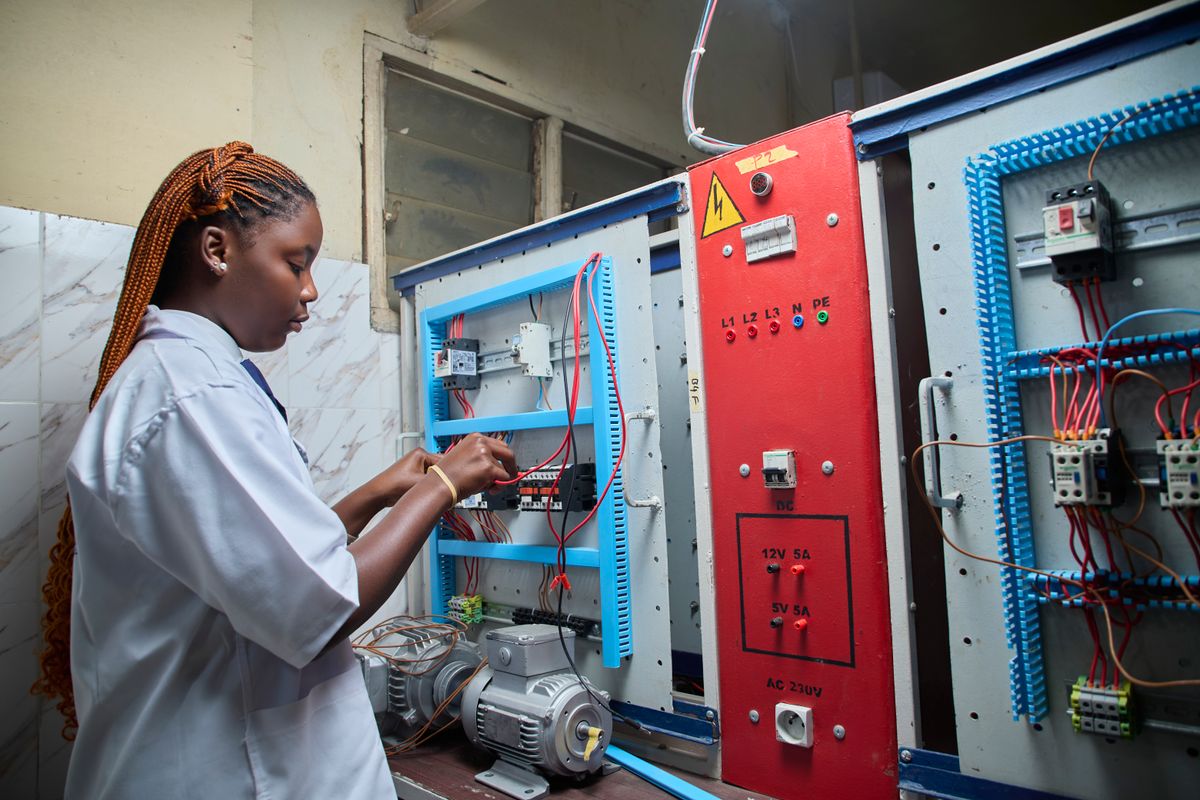
Commercial electricians running conduit and terminating a panel on a crew-run job site
Commercial trade work — the kind of repeat, crew-run jobs a buyer pays more for.

Photo: Pexels

HOW WE WORK WITH YOU

Check it yourself.
Run a plan yourself.
Or bring us in.

Four ways, explained below. Start wherever fits.

Texas commercial electrical.
Industrial power & controls.

Owner-led · Houston, Dallas–Fort Worth, Austin, San Antonio, and every Texas metro

Commercial electrical contractorsIndustrial & controlsService & maintenance agreementsThinking about a sale

HOW WE HELP TEXAS ELECTRICAL OWNERS

What we fix, and what you walk away with.

SweetSpot is not a broker. We are operators and acquirers who work inside your company, on site, on the few things that decide what an electrical contracting business is worth and whether it runs without you. If one of these sounds like your shop, that is the reason to call.

If this is you

“I hold the license, and I sign every estimate.”

What we do

Move estimating, the hard commercial calls, and approvals onto your people, with a plan to bring a licensed master into the business who isn’t you: clear decision rights, a second estimator, phone routing that stops at your project managers instead of your cell, and a simple scorecard.

If this is you

“Most of our work is one-off bids we have to go win again.”

What we do

Build the recurring base a buyer pays for: service agreements, commercial maintenance, and repeat commercial and industrial accounts, with the follow-up discipline that keeps them coming back instead of re-bidding every job.

If this is you

“My books are built for the tax man, not a buyer.”

What we do

Get the financials to where a buyer can verify the earnings: personal vehicles, family payroll, and cash work documented so a buyer adds them back to profit, job margin you can see from bid to final invoice, and the two clean years a buyer expects before you go to market.

If this is you

“Our biggest GC calls me, not the company.”

What we do

Put a real second-in-command and a weekly management rhythm in place so the GC and property-manager relationships, foremen, and crews hold together without you, and get the bonding, licensing, and callback records organized before a buyer’s team asks for them.

What working with us looks like

Start wherever fits. Each one tells you plainly whether the next is worth it.

If you want to check it yourself

Free self-assessment

What happens: you rate your business online against what a buyer checks. No email needed to see your results.

You walk away with: your weak spots, scored area by area.

Choose this when you want a private first read before you talk to anyone.

Take the free self-assessment
If you want a plan you run yourself

Field Guide

What happens: we build a written plan from your self-assessment answers, and a person reviews it before it ships. You do the work; the guide tells you where to start and when to get help.

You walk away with: what to check first, which fixes usually waste money, three actions to run one at a time, and worksheets that show whether each one worked.

Choose this when the problem is familiar and narrow, and you would rather fix it yourself.

See the Field Guide
If you want us to look at your records

Business System Inspection

What happens: remote, on one problem area. We review your actual records and talk through how the work really runs, with you and, where it helps, the people who do it.

You walk away with: a written call: what is causing it, what to fix first, what to leave alone, and whether bigger work is worth paying for.

Choose this when you know roughly which area is hurting, but not why.

See the Inspection
If you want us on site

Three Engine Diagnostic

What happens: on site at your business, across the whole operation. An advisor walks the work with you, your project managers, your estimators, and your foremen and looks at your sales process, delivery, and cash flow together.

You walk away with: the main problem named and a prioritized plan, delivered in person, followed by a written report for your team.

Choose this when you can feel the pressure but can’t tell where it lives, or you want the whole business looked at in one pass.

See the Diagnostic

What that looks like in practice: a commercial excavation business near $7M in revenue still routed every exception through the owner’s phone. After decision rights, leadership accountability, phone routing, and scorecard work, the owner moved from short trips to a full week away while the business kept running. Read the Field Note →

See how we work with you

Start wherever fits; each one tells you whether the next is worth it.

WHAT A BUYER ACTUALLY PAYS FOR

What a buyer actually pays for.

A buyer isn’t buying your revenue. He’s buying how sure he is that it repeats after you hand over the keys — and in an electrical company that comes down to a few things you already track in your head.

01

Recurring service and contracted work

The single biggest lever. Service agreements, commercial maintenance, and repeat commercial accounts are sticky, repeatable revenue a buyer can count on — worth far more per dollar than work you have to go win again on the next bid. A shop built on service and long-term commercial relationships prices at the top of the range; one built on one-off bid projects and new construction prices at the bottom, because that work is cyclical and lumpy.

First check Count the revenue under contract versus the revenue you re-bid every year. Ask how to grow the recurring base →

02

The mix of work

Commercial and industrial service with recurring accounts reads durable; competitive bid work and residential new construction reads volatile. Growth lanes — data and low-voltage, EV charging, solar tie-ins, generator and backup power — can add value if they’re real revenue and not just a line on the website.

First check Split last year’s revenue across service, contract, and bid/new-construction work. Talk through your mix →

03

Whether the company runs without you

Be honest about who estimates the big jobs, who runs the hard commercial calls, and who the top GCs and property managers actually call. If that’s you, a buyer sees a job, not a company. Owner dependency commonly caps an owner-led business at one to two times earnings and typically takes at least a full year’s profit off the price — in electrical it usually shows up as you hold the license and you sign every estimate.

First check Take a week away. What stops? Tell us what stopped →

04

Your licensed bench and crew

In a licensed, labor-short trade, the crew and the licenses are half of what he’s buying. A stable, trained bench with a master besides you is worth a premium; a shop that can’t legally run — or empties — if one or two people leave is a risk he prices down.

First check Name who could run a job without you, and every master license the company holds. Rate it in the free self-diagnostic →

Found your gap? See how we can help

Check it yourself, run a plan yourself, or bring us in.

WHAT IT’S WORTH

Market ranges — not your number.

These are market ranges, not your number. Published transaction benchmarks (BizBuySell Insight Reports, the Pepperdine Private Capital Markets Report, and BVR DealStats / IBBA Market Pulse) show most electrical contracting businesses selling in the range below. Where yours lands is set by the drivers, not the average — a shop built on recurring service and contract work with a licensed master bench and management in place can sit at the top or beyond it; one built on one-off bid projects with the owner on every estimate and holding the only master license sits at the bottom. Owner-operator electrical contractors run roughly 2.5×–4× SDE; contract-backed, management-run shops reach about 5×. (Illustrative — synthesized from BizBuySell Insight Reports, Pepperdine Private Capital Markets, and BVR DealStats / IBBA Market Pulse transaction data. Not a valuation of your business.) The only way to know your number is to look at your business. Get a directional read →

Electrical — market range (× profit (SDE)) Illustrative — market data as of July 2026 premium end 5× 2.5–4× 0×1×2×3×4×5×6×7×
Synthesized from published BizBuySell Insight Reports (2025–2026), the Pepperdine Private Capital Markets Report (2025–2026), and the BVR DealStats Value Index / IBBA Market Pulse. Contract-backed work with a master-electrician bench and management in place reaches ~5×; owner-dependent shops sit lower. These are market ranges, not a valuation of any one business.
What moves the number: size and profitability Same trade, bigger business$1M revenueworth less$10M revenueworth more Same revenue, more profit$500K profitworth less$1.25M profitworth more
Illustrative — the direction, not a quote. A larger, more profitable business earns a higher multiple and applies it to a bigger number.

Where a range doesn’t spend: a broker will tell you your shop is beautiful (he’s paid to list it) and a valuation firm will hand you a flattering figure — but only the number a buyer agrees to actually spends, and that’s set by the condition inside your business, not the average. A word about value →

Most owner-led electrical contracting businesses sell inside a market range set by published BizBuySell Insight Reports (2025–2026), Pepperdine Private Capital Markets, and BVR DealStats / IBBA Market Pulse transaction data (shown below). That range is only shorthand — where a specific business lands is set by the drivers above, not the average. Multiples are specific to each industry, and they change regularly with the business and economic climate.

Two things move you inside it: size and profitability, and how prepared the business is. A $1 million-revenue electrical business and a $10 million one do not trade at the same multiple, and at the same revenue, a shop earning $1.25 million in profit is worth far more than one earning $500,000. Layer preparedness on top — recurring service and contract work, a licensed master bench, clean books, a business that runs without you — and the number climbs toward the top of the range or beyond.

Plenty of electrical businesses sell for far less — some for as little as half a year’s profit — not because of their market, but because they were nowhere near ready. What a buyer actually pays for is true, transferable cashflow: how much the business earns without you. How we read business value is operator work, not an appraisal — we are operators, not brokers.

(Last updated: . Market ranges are synthesized from published BizBuySell Insight Reports (2025–2026), Pepperdine Private Capital Markets, and BVR DealStats / IBBA Market Pulse transaction data for owner-led companies, to be confirmed against your real numbers — not a guarantee, an appraisal, or tax or investment advice.)

See how we work with you

Moving it toward the top of the range is the work we do.

WHAT GETS ELECTRICAL DEALS IN TROUBLE

The things owners miss until diligence.

A few are specific enough to the trade that owners don’t see them coming until a buyer’s team is already in the books.

GETTING READY (AND THE RUNWAY IT TAKES)

None of this gets fixed in the last ninety days.

Getting a licensed master besides you in place, shifting toward recurring service and repeat commercial accounts, cleaning up the books, documenting who estimates and who runs the jobs — that’s a two-to-three-year arc, and it’s the same work whether you sell to an outside buyer, your team, or a competitor. But who you sell to changes the price: a strategic buyer who wants your people and contracts, a financial buyer building a portfolio, a competitor buying market share, and your own team will each put a different number on the same business. Picking the buyer on purpose, instead of taking the first one who calls, can change the outcome dramatically. It is also the work that quietly raises what the business is worth while you still own it.

If you can’t yet name who signs the estimates when you’re out for ninety days, hand a buyer three clean years of financials without explaining them, and say which of your contracts carry a change-of-control clause, you’re likely two to three years from ready. That’s a schedule, not a verdict — and a shop that gets itself ready has real demand waiting.

See how the transition and exit path works →

See how we work with you

The earlier you start, the more of the work moves the price.

WHY SWEETSPOT

Why electrical owners bring us in, and not a business broker.

  • We read your company the way a buyer will, because our founder has been the buyer.Daniel Sweet has been on both sides of small-business sales and purchases, with $250M+ of deal value advised, and has bought and grown Texas companies through Sweetview Partners since 2019. We know which electrical revenue a buyer discounts (one-off bid projects and residential new construction) and which he pays for (service agreements, commercial maintenance, repeat commercial and industrial accounts).
  • We change the number before it is set. A broker sells the number you already have.A broker lists the business you have today, finds buyers, and takes a commission when it closes; by then the price is largely set. SweetSpot does not take listings or commissions. We do the work in front of the sale: the recurring base, a licensed master who isn’t you, the estimating and GC relationships off you, the books, the crew.
  • We work on site, with your people.Advisor-led, delivered by a SweetSpot consultant under Daniel’s direction: operators who have done real field-heavy work, not spreadsheet people who have never pulled wire in an attic in August. The Diagnostic happens where your office, estimators, project managers, and foremen actually work.
  • You start wherever fits, and only go further when it is worth it.The four ways above run from a free self-assessment to an on-site Diagnostic. Each one tells you plainly whether the next is worth paying for, including when the answer is “your team can handle this.”

Most owners start two to three years before they want to sell — two clean years of financials is the practical minimum. If you’re even thinking about it, the free self-diagnostic and the sale readiness path are the place to begin.

The spread — from roughly half a year’s profit at the unprepared end to the top of the range when the business no longer depends on you — is the whole point. The distance between the two ends is what reducing owner-dependence and building transferable cashflow does to the price, and it is exactly the work SweetSpot helps owners do.

A description of the work, not a reported client result.

Selling an electrical contracting business in Houston (exit planning), Dallas–Fort Worth (exit planning), Austin (exit planning), or San Antonio (exit planning)? SweetSpot works with owners across all 268,596 square miles of Texas to prepare their business to get the maximum price possible.

24-PAGE FIELD GUIDE SAMPLE · ELECTRICAL & SPECIALTY CONTRACTING ($8.5M)

See what a completed 24-page Field Guide looks like for Electrical & Specialty Contracting ($8.5M).

Commercial & industrial trade work · 38-person shop · Houston / DFW / Austin / San Antonio

12-Month Payoff Scoreboard: +$85K–$125K/yr Profit · +$195K–$415K Value Lift
  • Stop unbilled field change orders and GC back-charges with a one-page foreman authorization gate
  • Build a second estimator and project-manager bench so bonding and GC relationships survive a handoff
  • Shift mix toward recurring service/facility work that commands top-of-range Texas trade multiples
Flip through all 24 pages → How the $295 Field Guide works →
Page 1 of 24-page Electrical & Specialty Contracting ($8.5M) Field Guide sample (+$85K–$125K/yr Profit · +$195K–$415K Value Lift)

Protected preview · Click to launch the 24-page Electrical & Specialty Contracting ($8.5M) walkthrough

YOUR NEXT STEP

4 ways to work with us.
Start wherever fits.

Each one tells you plainly whether the next is worth it.

IF YOU WANT TO CHECK IT YOURSELF

Free self-assessment

Rate your business online against what a buyer checks; no email needed to see your results. You walk away with your weak spots, scored area by area.

Take the free self-assessment

IF YOU WANT A PLAN YOU RUN YOURSELF

Field Guide

A written plan built from your self-assessment answers and reviewed by a person before it ships. You walk away with what to check first, which fixes usually waste money, three actions to run one at a time, and worksheets that show whether each one worked.

See the Field Guide

IF YOU WANT US TO LOOK AT YOUR RECORDS

Business System Inspection

Remote, on one problem area: we review your actual records and talk through how the work really runs. You walk away with a written call: what is causing it, what to fix first, what to leave alone, and whether bigger work is worth paying for. Choose this when you know roughly which area is hurting, but not why. How the Inspection works.

Or send a message: personal reply within one business day →

IF YOU WANT US ON SITE

Three Engine Diagnostic

On site, across the whole operation: an advisor walks the work with you and your people and looks at your sales process, delivery, and cash flow together. You walk away with the main problem named and a prioritized plan, delivered in person, followed by a written report for your team. Choose this when you can feel the pressure but can’t tell where it lives, or you want the whole business looked at in one pass. How the Diagnostic works.

Ask about the Diagnostic

BEFORE YOU CALL

Questions Texas electrical owners ask.

How do I sell my electrical business in Texas? (Step-by-step FAQ) →

What is my electrical contracting business worth?

More about your mix and license than your revenue — recurring service and contracted work versus one-off bid projects, whether the master license and key relationships depend on you, and whether the books hold up in diligence. Ranges run roughly 2.5×–4× SDE for owner-operators, to about 5× for contract-backed, management-run shops (published broker/advisor data as of July 2026, illustrative) — but yours is set by the drivers, not the average.

Does the master electrician license affect the sale?

Yes — often the biggest single issue. If the company runs under your personal master license, a buyer needs a qualified master to stay or be hired before it can legally operate. Getting a licensed master besides you into the business early is one of the most important steps to being sellable.

Do buyers pay more for service or new-construction electrical work?

Recurring service and repeat commercial work, clearly — it’s stickier and higher-margin than one-off bid projects and residential new construction, which are cyclical and lumpy.

Are you going to sell it for me?

No — we’re not brokers and don’t take listings. We get you and the business ready and help structure the transition; the deal is yours.

MORE TEXAS VALUATION GUIDES